SalmonCat Studios
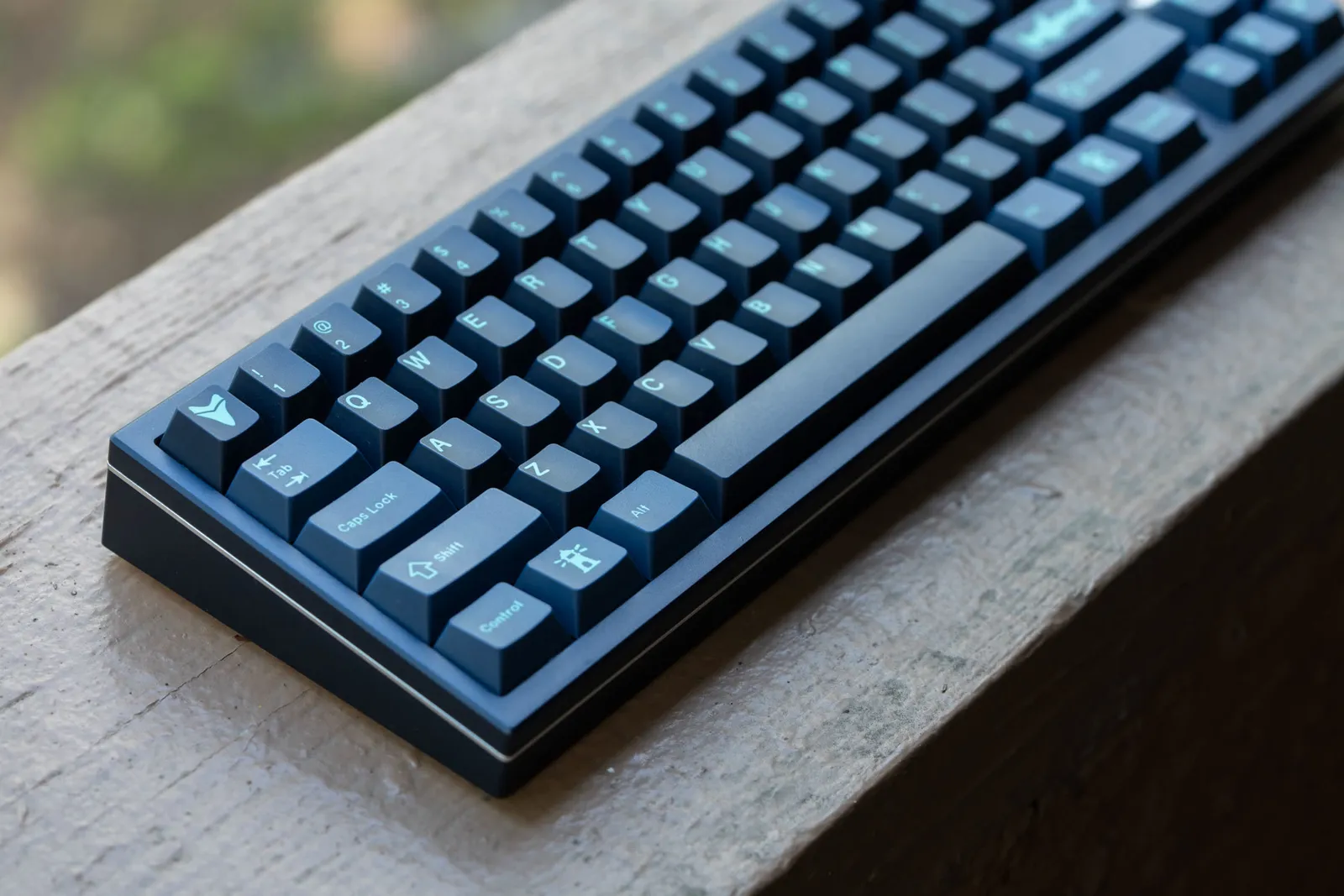
A mechanical-keyboard company I co-founded and ran end to end. Our product, the Aozora 69, set out to do something the custom-keyboard market said you couldn’t: deliver a highest-end finish at an entry-level price. Making that math work is the whole story.
The strategy
Custom mechanical keyboards are an enthusiast hobby with enthusiast prices. A milled-aluminum board with a custom PCB normally ships through a group buy at $250–$500+, and the boutique makers running them all competed for the same buyers who could already pay. We chose not to play that game on its own terms.
The Aozora was a deliberate flank: match the premium spec, halve the price, and grow the market underneath the incumbents. Three decisions made that more than a slogan.
Attack the cost base, not the price tag
Every boutique maker carried a similar boutique cost structure, so they all clustered at similar prices. We competed a layer down — on cost itself. DFM, direct component sourcing, and buyer self-assembly built a structurally lower unit cost rivals couldn’t match, which let us list at roughly half and still hold ~50% margin. The low price was a symptom; the cost base was the strategy.
Grow the market, don’t fight for share
At $250–500 the hobby was gated, and every maker was competing for the same enthusiasts who could already pay. We aimed instead at the people that price excluded — newcomers and the priced-out. Bringing new buyers into the category is a far better game than a share war against entrenched names.
Win on a transparent value comparison
Milled 6061 aluminum, custom hotswap PCB, brass plate, VIA — the same spec sheet as boards costing twice as much, laid side by side. We never positioned as “cheap.” We positioned as the identical thing, honestly priced, and let buyers do the math themselves.
The position is easy to describe and brutally hard to fund: at half price there’s no margin to waste, so the entire product had to be engineered for cost from the first sketch — and the launch had to pay for itself. The two sections below are how each half of that was actually pulled off.
The development process — engineering the cost down
The launch price was only possible because we drove the unit cost from an opening factory quote of $350+ down to $138 — a 61% reduction — without touching the spec that made the board desirable. That gap is what funded the whole company.
Five factory revisions
Co-developed the milled-aluminum tooling with the factory over five formal design-for-manufacture passes — simplifying geometry, loosening tolerances where they didn’t matter, and cutting finish steps the factory billed for. Dozens of internal CAD iterations of the top, bottom, plate and badge preceded the cut.
Sourced through the shortage
Launched into the 2021 global chip shortage. Rather than pay spot-market markups that would have blown the bill of materials, I sourced the controller and the scarce PCB components directly — protecting the unit cost the whole price depended on.
Designed for self-assembly
A custom alignment mechanism let buyers assemble the board themselves — removing a paid factory assembly step worth ~$7–8 a unit, and turning the build into part of the product experience enthusiasts actually wanted.
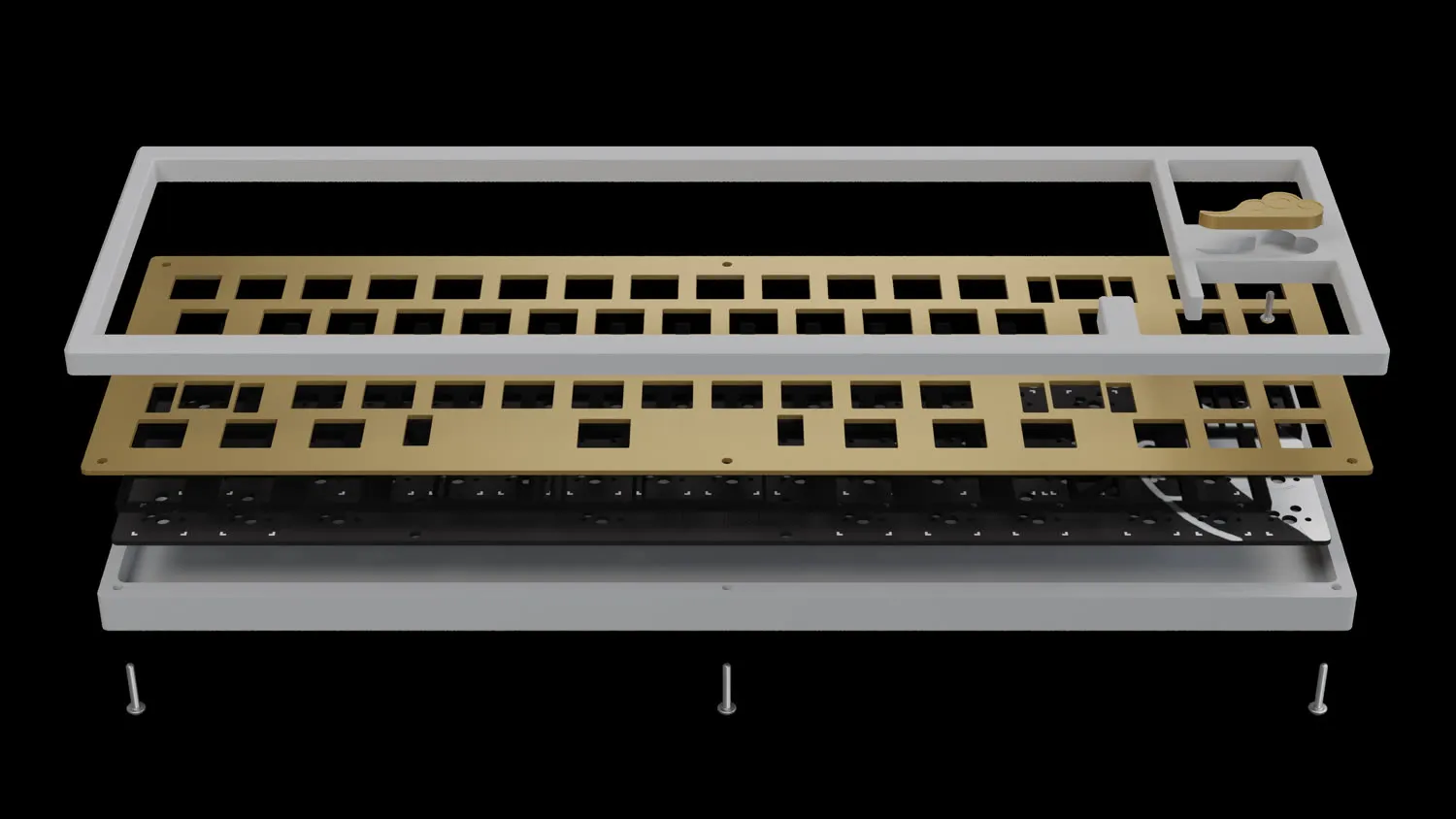
The cost didn’t fall in one negotiation — it fell across five formal factory revisions and a long internal CAD history (the top, bottom, plate and badge each went through many iterations before tooling was cut). Later revisions kept improving the board after launch too — a USB-C bottom case, a flex-cut plate — without raising the price.
The board — engineered to outlast its price
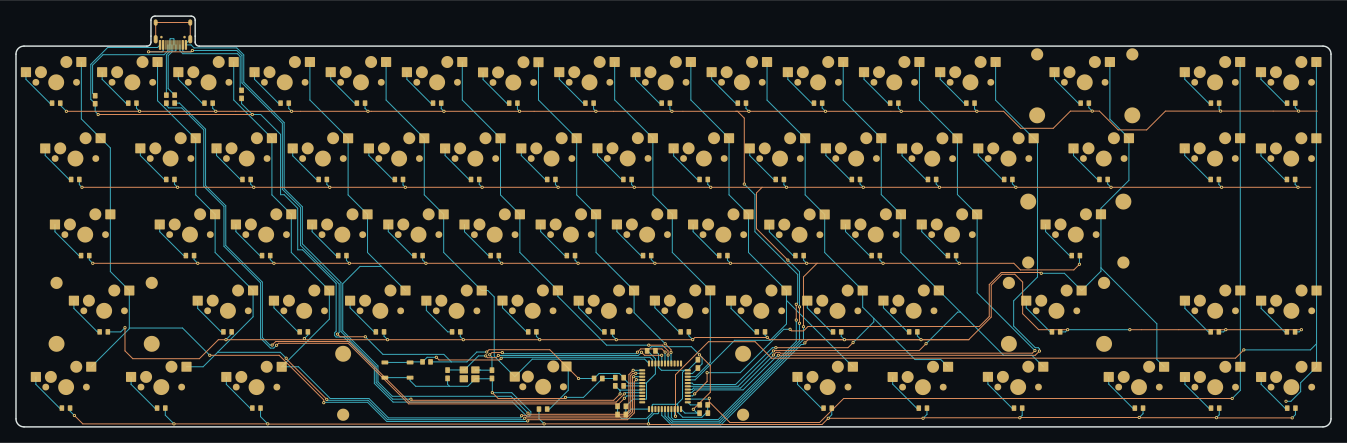
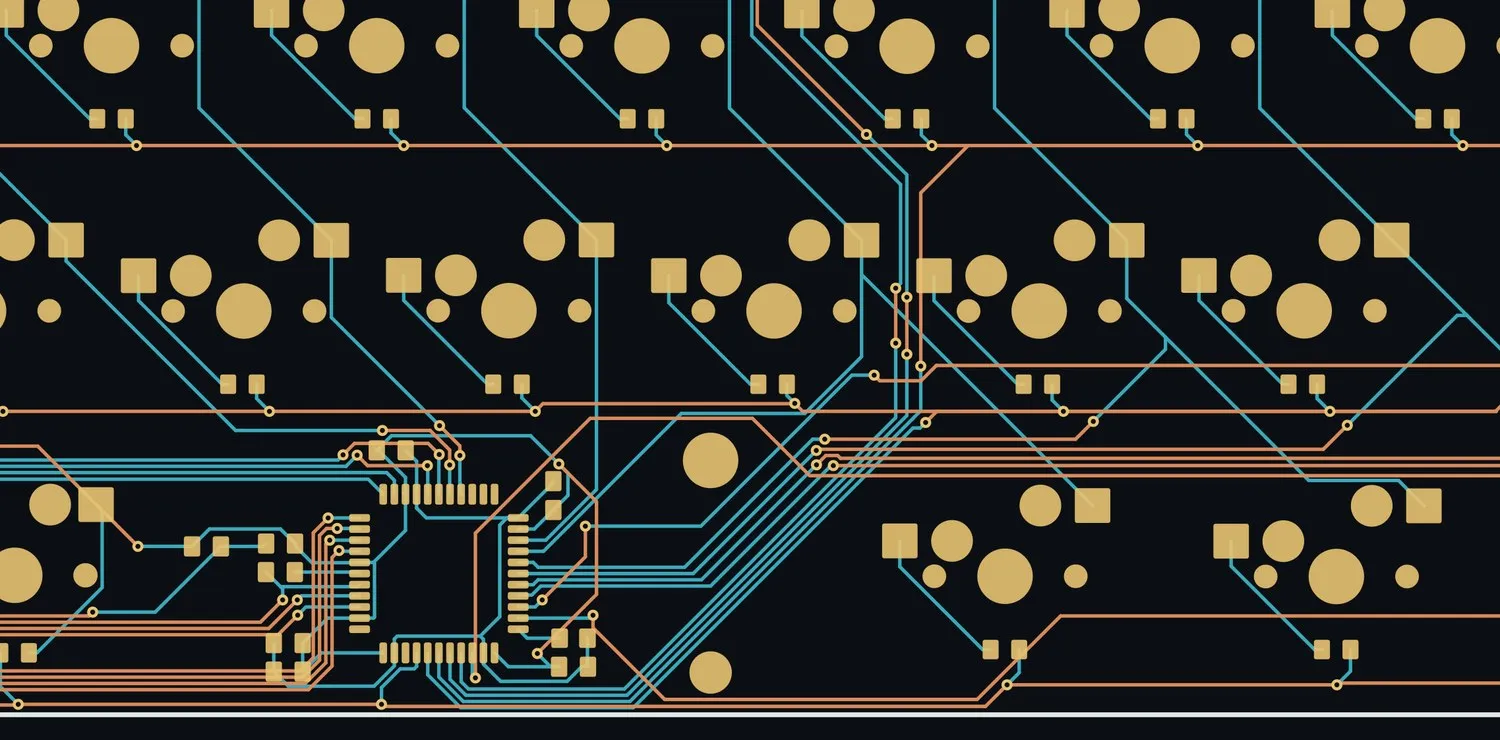
A low price usually signals corners cut on the part nobody photographs: the PCB. We went the other way. I laid out the board to survive the abuse that quietly kills keyboards costing twice as much. Below is the real production layout — both copper layers of the shipping aozora_PCBv1 file.
Routing that dodges the failure points
On a lot of boards — the Drop / Massdrop K-Type I used to own among them — matrix traces run right under the stabilizers and stab wires. Years of flex and friction abrade the copper until a key silently dies. I routed the matrix clear of every stabilizer cut-out and moving part, so no trace sits where the mechanism can wear it through.
A USB port that can’t tear off
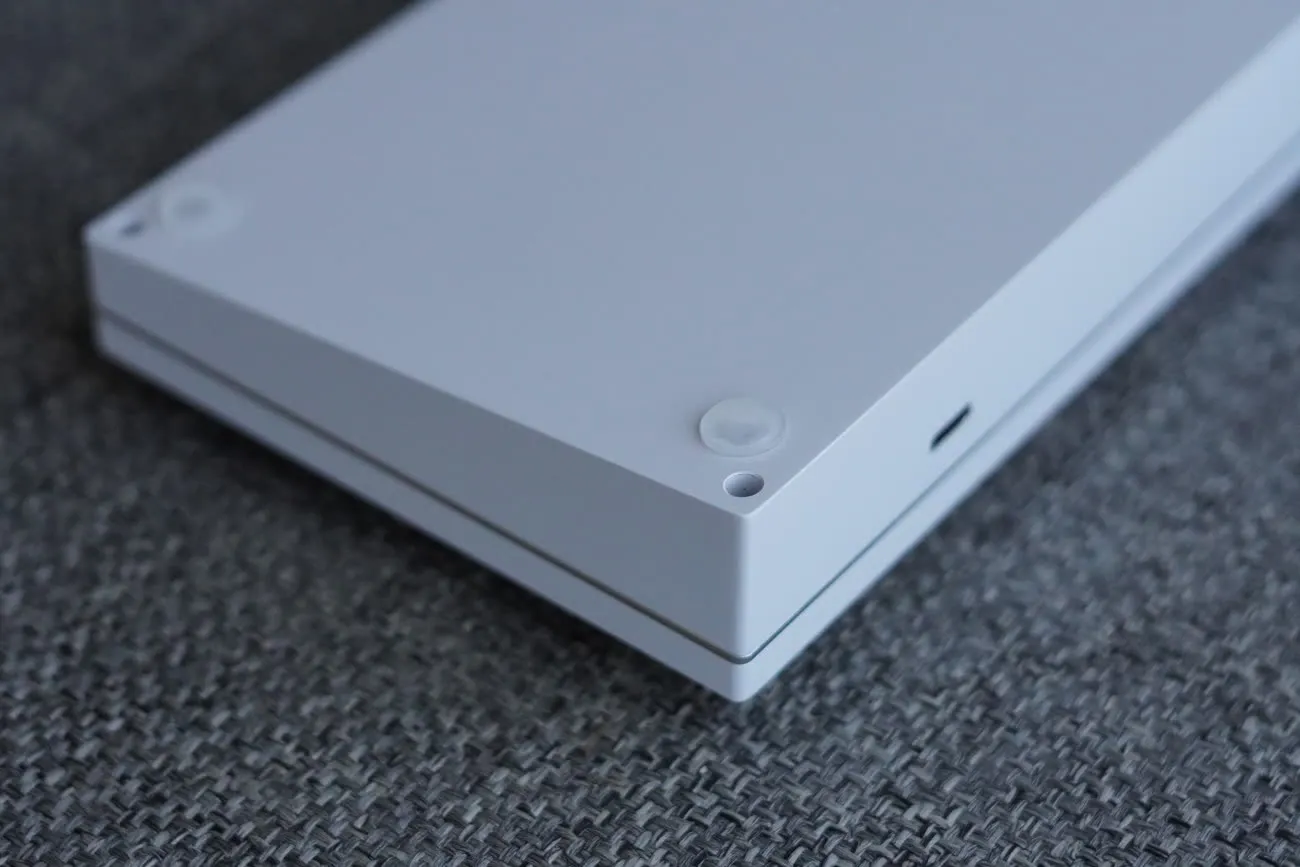
The most common way a keyboard dies is the USB connector ripping its pads off the board. I placed the Type-C port to seat tightly into the milled case, so the aluminium housing — not the solder joints — takes the strain of every plug and unplug.
A clock placed for stability, not just function
The 16 MHz crystal and its passives were chosen and positioned for long-term stability. High-speed lines were kept short and terminated, and the crystal placed with its harmonics in mind, so the board never turns its own traces into stray antennas — RF discipline you rarely see at this price.
The product — Aozora 69
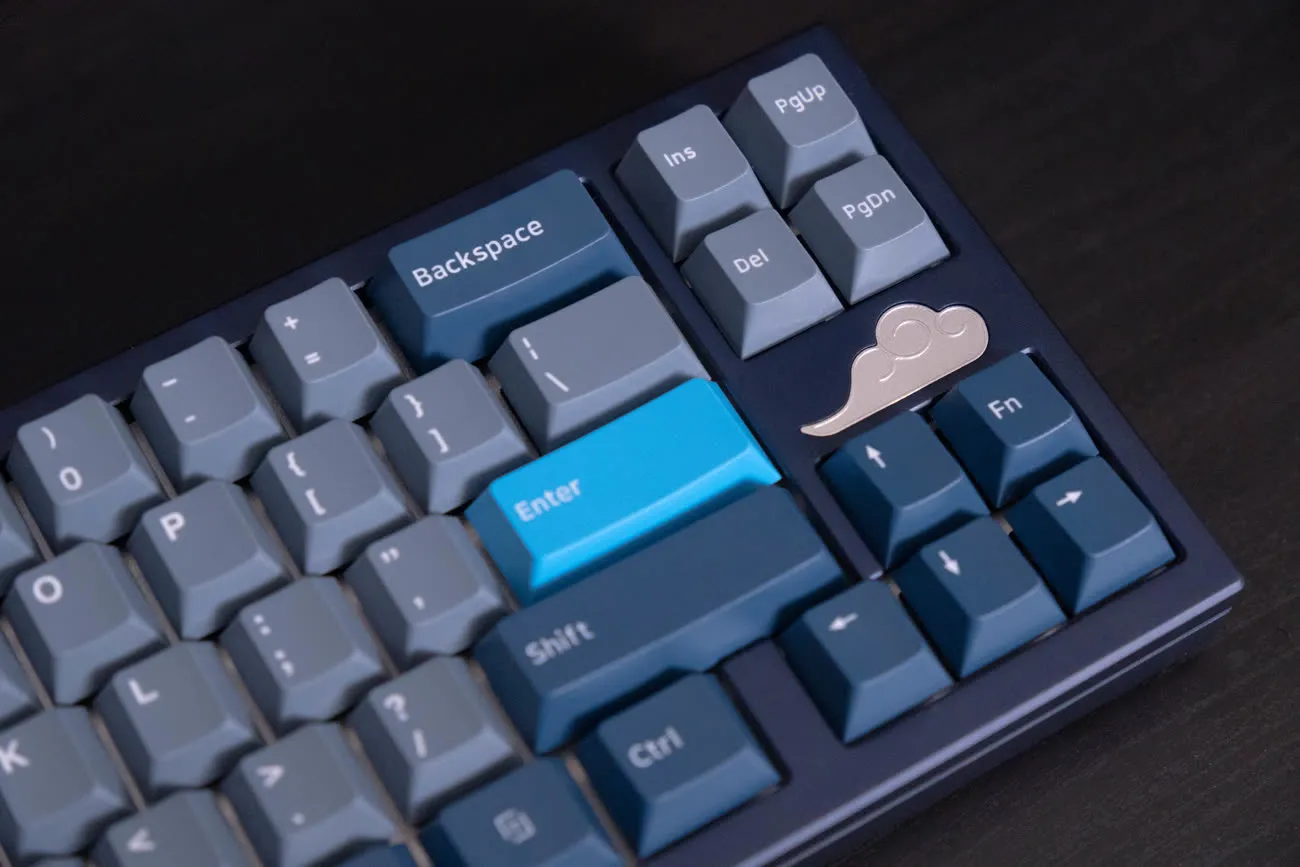
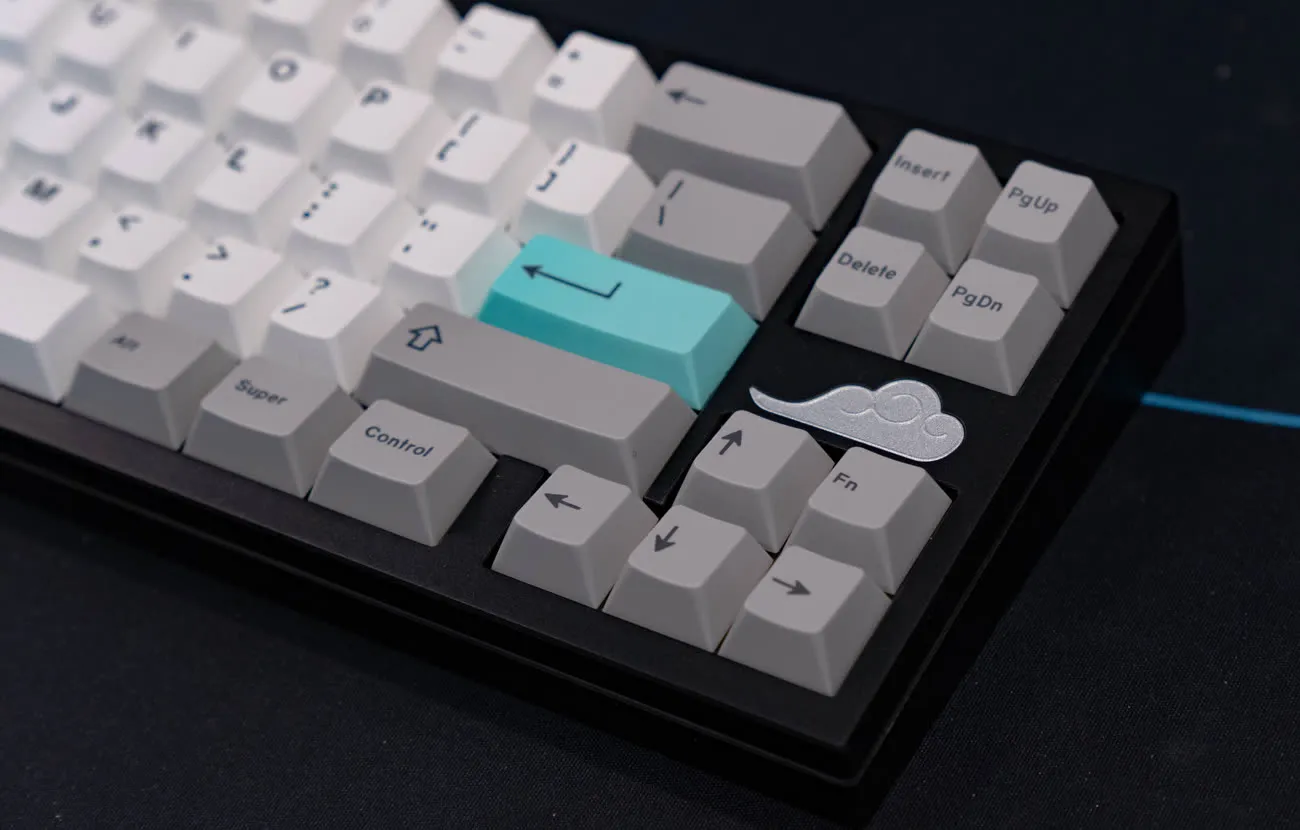
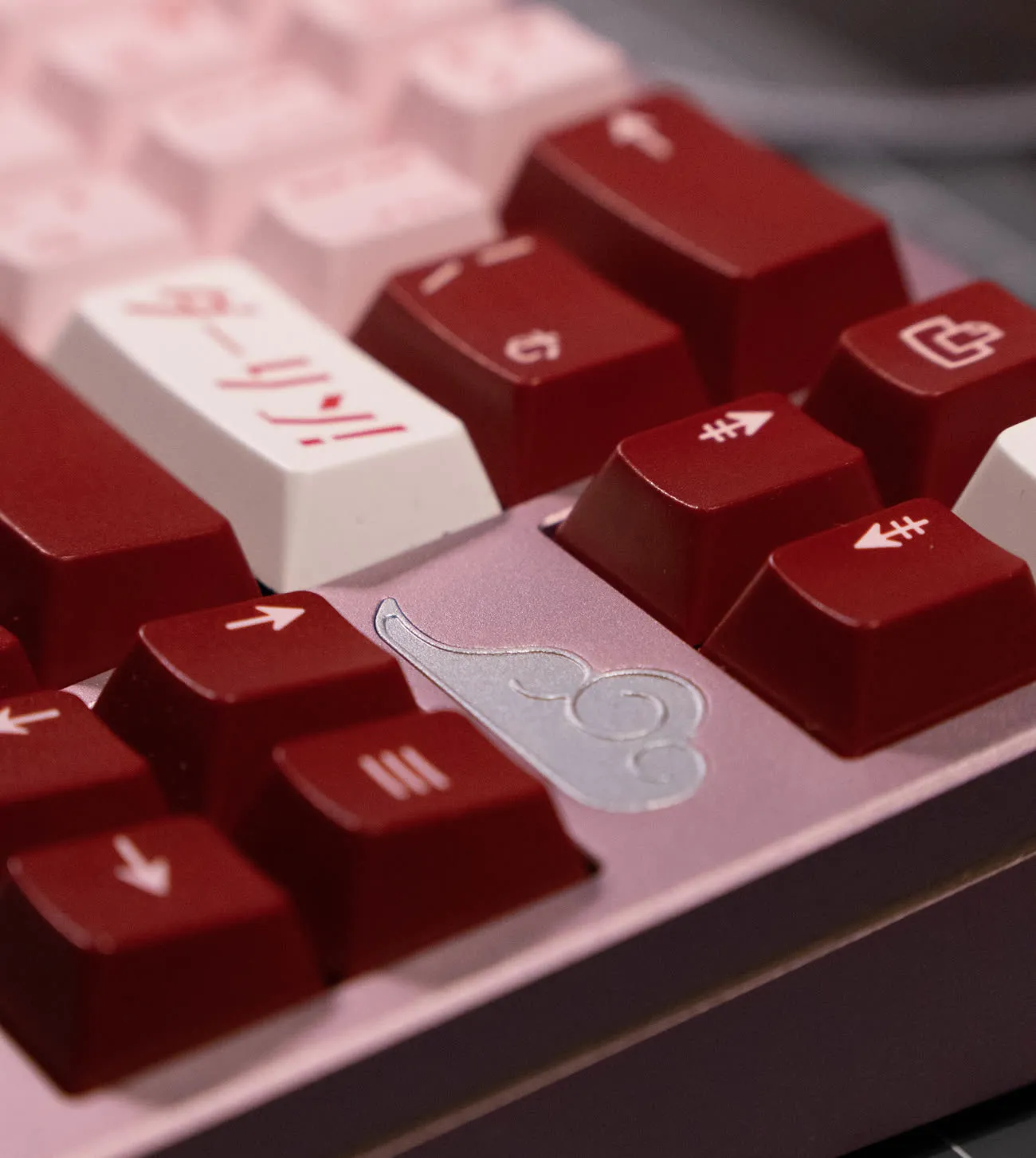
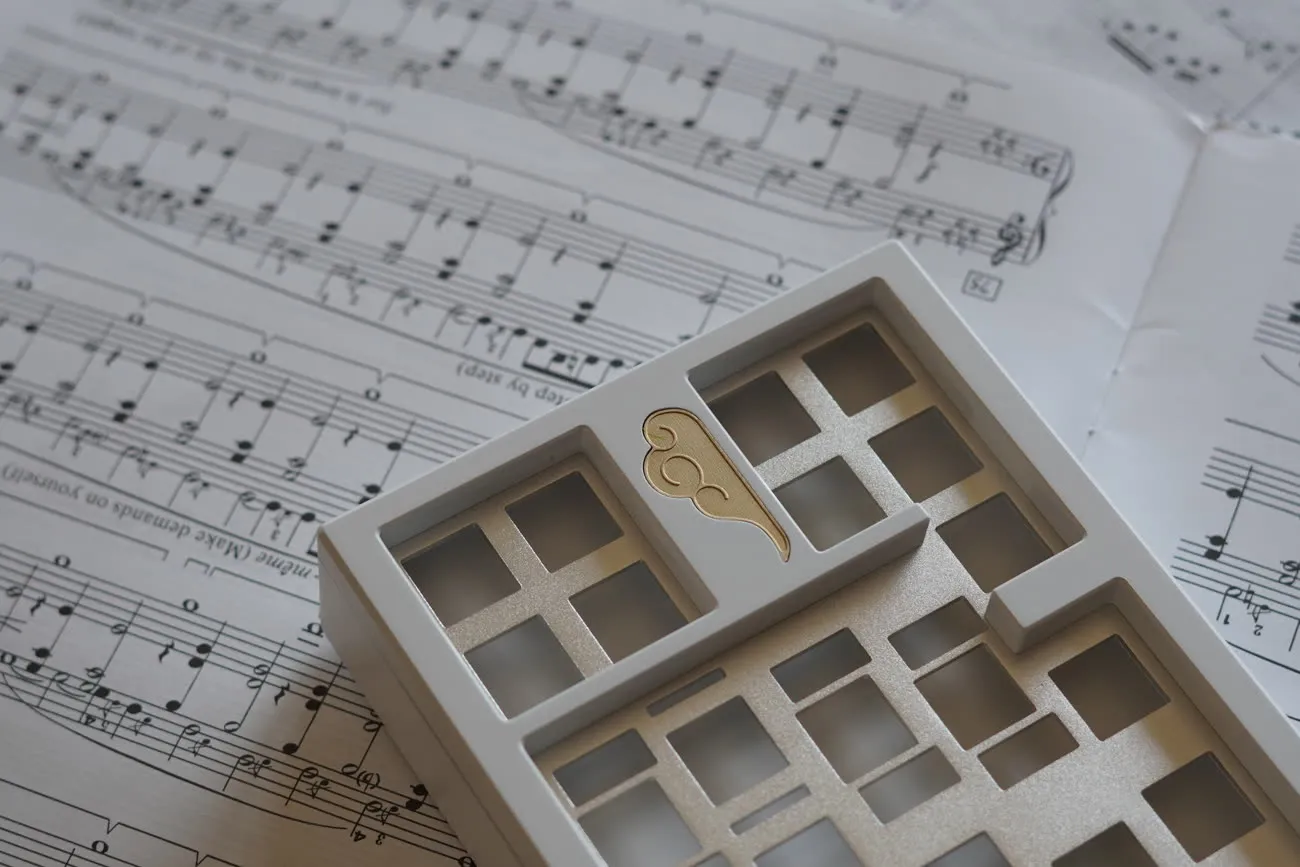
Aozora (青空, “blue sky”) is a 69-key, 65%-style kit. Premium materials, a swappable cloud badge that became the brand mark, and five colorways.
The launch — a business that funded itself
We sold the Aozora through a direct-site group buy — a pre-order run on our own storefront, not a crowdfunding platform. That wasn’t just how keyboards sell; it was the capital strategy.
Customers paid in full at order, weeks before anything was built — so the pre-orders financed the factory order. No debt, no investors, no speculative inventory: we only ever manufactured what was already sold. The group buy was the financing round and the demand test in a single 30-day window.
- 1 Build demand IC threads · renders · sound tests
- 2 Open the group buy 30-day pre-order window
- 3 Cash collected up front paid in full at order
- 4 Place the factory order funded by pre-orders
- 5 Manufacture & fulfill build only what’s sold
The window cleared the $50k goal in under a week and closed at $231,849 — 4.6× target, 849 orders at a $273 average. No marketplace fees, no platform cut: we owned the channel, the customer relationship, and the data. The demand was built first, in the places enthusiasts actually live:
Demand before product
Months of interest-check threads, renders, sound tests and community feedback meant launch day opened to an audience that already wanted it — the group-buy model only works if the want is real first.
The data told us what to build
Brass plates outsold aluminum 4:1; the Hakushi white colorway broke away at 34% of orders. Owning the storefront meant we saw those signals directly and stocked to them.
Then we had to ship it
Launch demand outran fulfillment fast. Rebuilding the pack-and-ship flow took us from ~20 to ~100 orders a day — the unglamorous half of a launch, and the half that decides whether customers come back.
Knowing when to stop
We’re winding the company down through 2026 — by choice, not by failure. That was a strategic call as deliberate as the launch.
Three things pointed the same way. The custom-keyboard boom cooled after 2021–22, so a second act would have been swimming upstream. As founders we had moved on to school and careers. And SalmonCat was always scoped as a finite venture — ship one excellent board to a community we cared about, not build a forever-company. Chasing a repeat group-buy to keep the lights on would have been worse business than a clean, deliberate close.
So we’re closing it the way we ran it. The plan is to open-source the Aozora’s files (PCB, plate, case CAD, build guide) under a non-commercial license, so the community can keep building, repairing and modding their boards long after support ends. A product is a promise to the people who bought it; winding one down responsibly is the last part of keeping that promise.
What I took from it
SalmonCat is the clearest proof I have of owning something commercial end to end. I didn’t analyze a business from the outside — I made the calls that decided whether it worked. The pricing position, the supplier negotiation, the launch mechanics, the fulfillment recovery: each one was a problem where the constraint was real and the money was real.
The throughline I keep coming back to is that the strategy and the engineering were the same problem. “Premium board, entry price” wasn’t a slogan — it was a unit-cost target that every CAD revision and every sourcing decision had to hit. Holding a business goal and a technical constraint in the same head, and refusing to let go of either, is the part of consulting and analysis I’m actually built for.
It also taught me where I was weak. Our inventory lived in spreadsheets far longer than it should have — the load-bearing thing held together with the flimsiest tool. A proper system from day one would have saved real money and real stress. I’d build that first next time.